The Relationship Between Volunteering and Charity Programs
When it comes down to it, charities and volunteers in the UK have a symbiotic relationship of sorts. Why is that?

By investing their time in charity, volunteers get to learn new skills, network with other people, foster a sense of community, broaden their perspectives on life, and feel fulfilled beyond their work and families.
Charities also benefit immensely in the following ways:
Operational Efficiency
The UK boasts over 170,000 registered charities alongside thousands of other community programs. But while these organisations may be in plenty, most of them are small and have limited access to resources. As such, if they were to meet all the financial overheads required to hire staff at the market rates, it would not be long before they went under. Volunteers fill this staffing gap, thus enabling these charities to meet their goals despite the financial strain.
Legitimacy
Charitable organisations are able to survive and thrive on the basis of trust, not just from their donors but also from their beneficiaries. In order for them to foster this trust, they must have people who oversee their actions and hold them accountable. As you would imagine, this is quite a taxing job that requires people who can ensure that the charities toe the ethical and legal lines. Volunteers are able to do this, either as trustees or as managers in some shape or form.
How Do Volunteers Support Charitable Initiatives?
While there are many ways that volunteers can support charities, you find that their work often falls into three categories:
The Frontline
Most volunteers do the service delivery on behalf of the charities, where they get to interact with the beneficiaries in real-time. Examples include handing out food at food banks, manning the telephone lines at crisis centres, or offering first aid at events.
Professional Help
Charities heavily rely on expertise from different professions, such as lawyers and IT specialists. But again, with limited resources, hiring these services becomes a challenge. Luckily for them, many of these professionals are more than willing to offer their help on a pro bono basis.
Advocacy and Awareness
Sometimes, charities engage in activities revolving around spreading awareness about topics or campaigning for policy changes. In these cases, they rely on volunteers who are willing to go door-to-door or meet people in the streets to provide this information.
The Various Forms of Volunteering
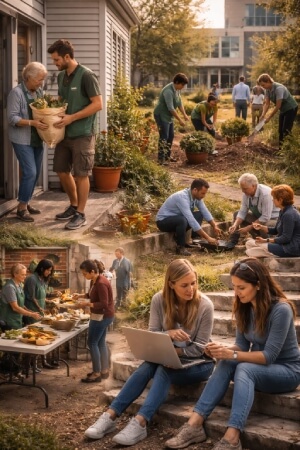
Volunteerism in the UK does not just differ in the types of initiatives that volunteers support. Instead, it also extends to the form of volunteering activities available. How so?
Formal Volunteering
Established charities often carve out regular time slots for their volunteers, such that they are expected to sign in and out per the schedule. Such organisations operate like typical jobs, minus the wages.
Micro Volunteering
While formal volunteering is often more time-consuming, micro volunteering is much more flexible as it is low-commitment. Here, volunteers take on simple tasks that they can accomplish at their own pace, such as signing a petition.
Employer-Supported Volunteering
In their bid to support local communities, many organisations give their employees paid time off to participate in local charitable projects. In this way, the companies play their part in the community while allowing their employees to be part of the volunteerism culture.
Mutual Aid
There are many cases where people set up informal groups where the sole goal is to help people within the community, such as helping elderly neighbours do their shopping or clean their houses.
Examples of Volunteer Programs
The UK has so many amazing charities that rely on volunteers that we cannot exhaust the list. Even so, let’s highlight some programs.
National Trust
This program aims to preserve the UK heritage and environment. And with 50,000 volunteers involved in meeting this goal, we have seen quite the positive change in the maintenance of historic homes, gardens, and coastlines across the UK.
Citizens Advice
Legal and financial aid is often costly. But with volunteers in this program offering free and confidential advice on matters such as legal rights and debt to millions of UK citizens, more people are able to get the information they need.
Royal Voluntary Service
With roots that date back to the Second World War, this service, which supports the NHS, aims to help patients transition from the hospital to their homes.
UK charities employ over 2,500 staff members on salaries in excess of £100,000 a year - fat cat salaried charity bosses are taking vital money away from the actual root cause of the charities they represent. Charity for their own cause. As I discussed with @TVKev | @TalkTV pic.twitter.com/uUxGmEiHod
— James Melville 🚜 (@JamesMelville) October 24, 2024